The Power of Sprint Intensity Intervals for Women's Heart Health



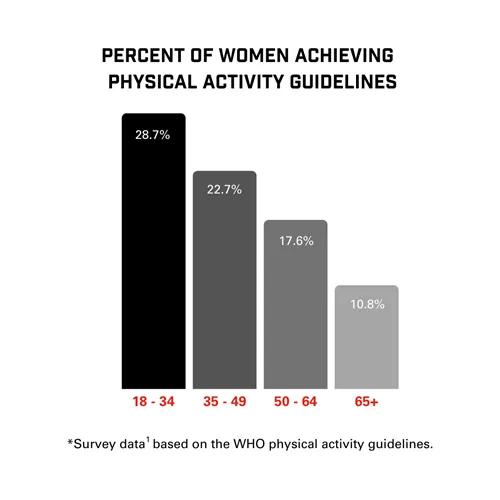
Cardiovascular disease is the leading cause of death in women, and the risk rises significantly with age. Regular cardio exercise significantly reduces the risk of heart disease, yet as the data show,1 women are less physically active with each passing decade.
Fitness facilities can help to reverse this trend by providing accessible cardio equipment and group exercise options, along with engaging trainers who encourage cardio training. Clear guidance helps members find options that fit their lifestyle.
Intensity Matters for Heart Health
Interval training is one of the most effective ways to improve cardiovascular health. Compared to steady-state cardio, it can deliver greater benefits in less time, so it is ideal for women who struggle to fit exercise into their schedules.²
By reaching higher intensities, an interval format is considered the most effective way to protect heart health, inducing beneficial cardiovascular adaptations.3 High intensity requires about 85-95% of peak heart rate and sprint intensity occurs at about 95% and beyond. These challenging intervals can only be sustained for about 30 seconds to minute, so low-intensity intervals are necessary for adequate recovery between intense bursts of effort.
A Stronger Heart in Weeks
Sprint intensity intervals improve the heart rapidly. In one study,⁴ women used indoor cycles three times a week, progressing from four to seven 30-second sprint intensity intervals per workout for four weeks.
The women showed evidence of a stronger, more efficient heart during exercise as indicated by a lower heart rate (-8.1%) and more blood pumped per beat (stroke volume; +11.4%).⁴ Additional heart health benefits are achieved in longer studies using intervals of high or sprint intensity for six weeks or more, such as improved blood lipids5,6 and significant fat loss.6,7,8,9
Practical Ways to Encourage Interval Training
- Highlight the time-efficiency and superior results of intervals that reach high intensities
- Guide members to pre-programmed interval workouts on cardio equipment
- Support members in gradual progressions, such as higher intensities, increasing the number of intervals, and completing up to three interval workouts per week
- Offer interval-based group classes