

Corporate Fitness That Works for Your People and Your Business


Business performance depends on people who can show up focused, engaged and ready to contribute. Energy levels, attendance and morale affect how teams operate and how consistently goals are met. Corporate fitness supports these outcomes through daily behaviors that influence work quality and retention.
Workforce demographics continue to shift. Millennials and Gen Z now represent a large share of employees. Research suggests these groups place high value on employer support for health and wellbeing, which influences engagement and long-term workforce stability.⁵
Attendance and Operational Impact
Unplanned absences affect productivity and increase pressure across teams. Research conducted by TNO, the Netherlands Organization for Applied Scientific Research, found that employees who exercised regularly were absent 25 fewer days over a four-year period than employees who did not maintain regular physical activity.¹
On-site fitness access supports regular movement during the workweek. Steadier attendance helps stabilize workflows and reduces indirect costs tied to coverage and delayed output.
Focus and Work Output
Desk-based roles demand sustained concentration. Mental fatigue affects accuracy, efficiency and decision quality. A large-scale study from Brigham Young University that examined nearly 20,000 employees found that individuals who had difficulty exercising during the day were 96 percent more likely to experience productivity loss.²
Regular movement supports energy levels and focus across the workday. These factors influence individual contribution and team effectiveness.
Stress, Culture and Retention
Stress affects collaboration and engagement. Research published by Harvard Medical School indicates that exercise supports memory and concentration and reduces stress shortly after activity.⁴
Lower stress levels support healthier team dynamics and reduce burnout risk. These outcomes influence retention and long-term hiring costs.
What Belongs in a Corporate Fitness Space
Successful workplace fitness spaces prioritize accessibility, ease of use and broad appeal. The goal is regular participation across varied fitness levels, not specialized training.
Cardio Equipment for Daily Use
Cardio equipment supports short movement sessions that fit into the workday. Treadmills, ellipticals and exercise bikes allow employees to reset mentally and physically without long time commitments. These tools support consistent participation tied to attendance and productivity outcomes.¹ ²
Selectorized Strength Equipment for Accessibility
Selectorized strength equipment supports guided movement and consistent form. This helps employees with limited experience stay comfortable during strength training and supports physical function over time.³
Functional Training for Flexibility and Space Efficiency
Functional training areas support mobility work and movement-based exercise that counteracts prolonged sitting. Research shows extended sedentary time affects muscles and joints, which regular movement can help address.³
Technology That Supports Participation
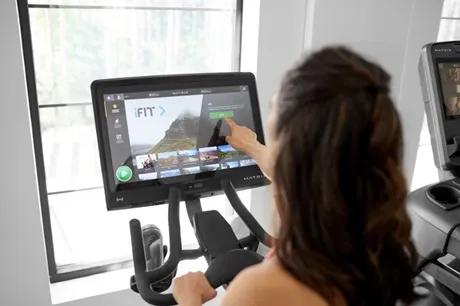
Fitness technology supports usage visibility and participation tracking for incentive programs. Access to digital content supports engagement and repeat use, which influences long-term participation rates tied to business outcomes.²
Fitness as a Leadership Signal
Accessible fitness spaces send a clear message about how an organization values its people. They reflect a focus on sustainable performance rather than short-term output. This signal plays a role in recruiting, onboarding and daily employee experience, especially for Millennials and Gen Z.⁵
How Matrix Supports Corporate Fitness Spaces
Matrix works with organizations to plan and equip workplace fitness spaces that support a wide range of employee needs and usage preferences. Our portfolio offers multiple options across cardio, strength and functional training, giving employees choice while keeping the experience easy to use. Durable construction supports frequent use in shared environments, while intuitive technology helps employees engage with equipment confidently from day one.
From early planning through installation and ongoing support, Matrix helps organizations create fitness spaces that support employee health and performance and long-term value for the employer.
